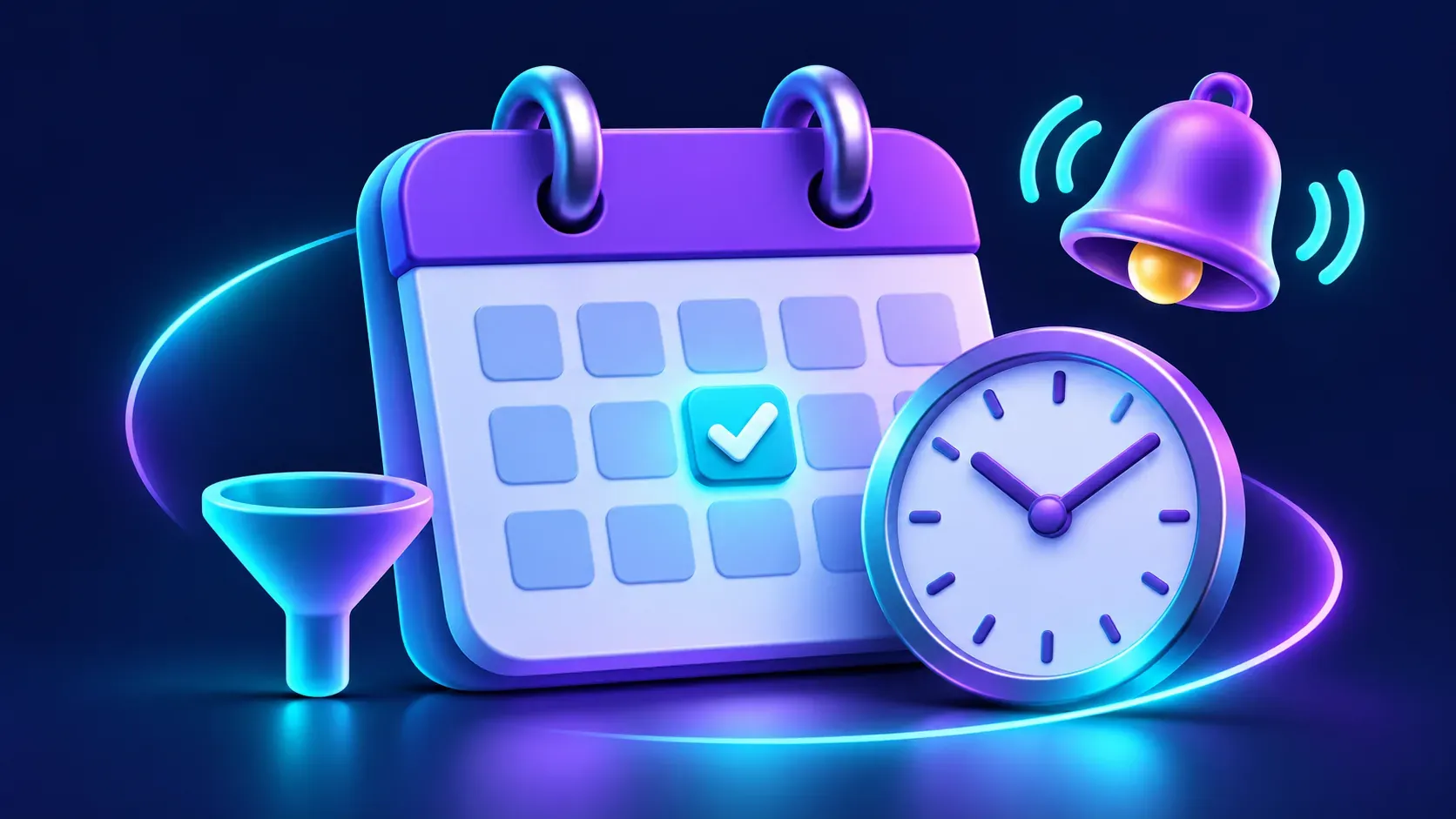
A reminder is only useful if it arrives early enough to act and does not bury important messages under noise. Start with one calendar and a test event before enabling a broad stream of notifications.
Define what should be announced
Choose which account holds the event, how far in advance you need the reminder and which channel should receive it. Consider travel time and preparation, not just the meeting start. Do not include private event details in a shared room unless that audience is authorized to see them.
The APX integrations guide describes Google Calendar reminders as an integration setting, off until enabled. It documents a configurable lead time and polling interval, excludes all-day events and declined invitations, and holds reminders through quiet hours. A moved event can be announced again. Check current settings rather than assuming every event will produce a notice.
Test delivery and failure
Create a harmless event on the intended calendar and verify the account, time zone, lead time and actual notification destination. Inspect the reminder after it arrives; a configured switch is not proof of delivery. Test quiet hours if they matter to your schedule.
Calendar access, model usage and notification delivery are separate concerns. If a reminder is missing, check the connection, event eligibility and channel before creating duplicate events. Review guest invitations separately: they can notify other people.
Sources
More articles
How to let an AI agent work on a site without sharing your password
A practical guide to browser handoffs, sessions and safer sign-in for AI agents.

Can an AI agent work from WhatsApp or Telegram? What to check first
Plan a chat-based agent workflow around identity, approval, delivery and privacy before connecting a messaging app.
Why an AI agent cannot use a connected tool: an MCP checklist
Troubleshoot an MCP connection in stages: scope, approval, sign-in, tool discovery and a safe test.